Something’s Seedy at the CDC

This week Secretary of Health and Human Services Robert F. Kennedy Jr. fired CDC Director Susan Monarez after she refused to accept his vaccination policy, which was based on his belief, rather than on science. Every director since 1953 (not including some interim/acting directors) has been a physician until Susan Monarez, who is a microbiologist. President Trump replaced her with Jim O’Neill, who is neither a physician nor a scientist, but an investor.

Besides picking someone who is completely unqualified to lead one of the most prestigious medical institutions in the world, since his election the CDC has lost thousands of employees and half of its budget. Susan Monarez’s firing prompted four leaders to resign. In August a shooter shot and killed a policeman and fired close to 200 rounds into the CDC headquarters because of his beliefs spurred on by vaccine misinformation. Afterwards Kennedy posted a number of pictures of his fishing trip before commenting on the shooting.

The CDC establishes immunization schedules for children and adults in the United States. But Kennedy, who has been a vocal critic of vaccines for years, fired all 17 sitting members of the CDC’s Advisory Committee on Immunization Practices (ACIP). Even if the replacements were all perfectly qualified, and they’re not, they wouldn’t be able to come up to speed learning the job fast enough to approve upcoming vaccinations, including new COVID-19 vaccinations.

I think the damage done to the CDC, to say nothing about damage to science at universities around the country from withholding research funding, is a crisis for medical science and public health in this country, and indeed in this world, and will probably last at least a decade if not reversed soon.

It’s also causing problems for individual doctors. I have the CDC Vaccine Schedules app on my phone, but I stopped updating it as I don’t fully trust the information anymore. That means for updates I have to look to professional organizations and other sources, and maybe other countries. My older patients, in particular, ask me about getting a COVID booster. I now tell them the FDA just approved a new one to cover recent variants, though limited who could get it, but we need to wait for the CDC to approve it (at least possibly for Medicare/insurance approval and for some pharmacies to stock it). One of my patients cast doubt on whether the CDC would approve it. I told them I figured they would at least need to approve it for those 65-years and older, as congressmen would want to make sure they could get it for themselves. My patient quipped they might then approve it only for those 80-years and older!

Public Policy Puts Health at Risk

In my last post I expressed concerns about healthcare. The concerns have only worsened. This is only some of the issues, and almost every day I put off finishing this article something else would come along.

  • PEPFAR – On the first day of his second term President Trump cancelled funding for PEPFAR ? Between 2003, when the program was signed into law, until 2024, it’s credited with saving about 25 million lives. AIDS was fatal for almost everyone who was infected with HIV forty years ago but starting in the 1990s treatments became available that turned it into a manageable chronic disease. It’s estimated that 20 million people had their treatment cut off without warning. Such a system of care cannot just be replaced immediately, even if there was another source of funding. In just South Africa alone it was calculated that the funding cut would lead to 565,000 new infections, life expectancy would decrease by 3.71 years, and deaths would increase by 38%. Not only might we have up to a million people die per year from untreated HIV, interrupting treatment increases the risk of developing drug resistant HIV, and that can spread to the whole world. The United Nations agency that fights HIV announced they are cutting their employee count in half due to funding cuts, with the U.S. funding 40% of their activities in 2023. They estimated that if funding is not restored more than 6 million additional people could die from AIDS in the next 4 years, and an additional 2,000 people a day could become infected with HIV. Just in the US it can end up costing more than we saved by the funding cuts, not to mention the inhumanity of it.
  • Food Safety Checks – According to the U.S. Public Interest Research Group Education Fund there was a 41% increase in food recalls for possible contamination by E. coli, salmonella, and listeria in 2024 compared with 2023. Food born illness increased by 20% and related hospitalizations and death double. But as a result of staff cuts at the Department of Health and Human Services, the Food and Drug Administration (FDA) has suspended its quality control program for food testing laboratories.
  • Food Security – The government agency responsible for running Meals on Wheels, among other things, is being dismantled by Health Secretary Robert F. Kennedy Jr. It also funds programs at senior centers and independent living.
  • Withholding Research Funds – The Department of Health and Human Services announced that they were going to cut funding for the Women’s Health Initiative, a ground breaking study that has been ongoing since 1990 and that has been following tens of thousands of women. Fortunately they reversed their decision a day later after a loud outcry. The National Institute of Health (NIH) had funded research on almost every drug on the market here. They announced they would invest $500 million dollars to study a universal vaccine using old, traditional technology. This will come at the expense of research on mRNA vaccines, which created the highly successful COVID-19 vaccines. This technology allows vaccines to be made much more quickly, important for future pandemics, and has been shown to increase survival in pancreatic cancer, an may cure chronic and genetic diseases, such as Type 1 diabetes and multiple sclerosis.
  • Preventive Health Research – Despite Robert F Kennedy Jr proclaiming he would Make America Healthy Again, President Trump recently proposed cutting the budget almost in half for the Centers for Disease Control and Prevention. Last month 2400 jobs were cut from the National Center for Chronic Disease Prevention and Health Promotion. That includes programs for lead poisoning prevention, HIV, firearm injuries, smoking cessation, preventing cancer, heart disease, diabetes, Alzheimer’s, epilepsy and Alzheimer’s disease, and for states to deal with public emergencies and things like blood pressure screening. The proposed budget would also cut the Eliminating the Office on Smoking and Health. It’s hard to see how that will make use more healthy.
  • Infection Control – The Trump administration shut down the Healthcare Infection Control Advisory Committee (HICPAC) that helps set national standards on controlling infections in hospitals, including hand washing, mask use, and isolating sick patients. The current recommendations date back to 2007 and an update was being prepared.
  • World Health Organization – President Trump issued and executive order withdrawing the United States from the WHO. It takes year for it to be fully implemented, given that countries have to give notice first, and it could be reversed by congress, but this will hurt global health and can affect us in the event of another pandemic or other medical issues.
  • Measles – Thanks to low vaccination rates we are experiencing a measles outbreak. There have been over 880 cases in the US this year as of late April. Two doses of MMR vaccine is 97% effective in preventing measles, and we need at least 95% of people to be vaccinated to prevent additional outbreaks. Yet in the 2023-24 school year only 92.7% of kindergartners were vaccinated. If that rate persists it’s estimated we’d have more than 850,000 cases in the next 25 years. If it drops 10% more then we could expect more than 11 million cases in the next 25 years. But if we increased the rate by 5% then we’d only have about 5,800 cases in that same period. That should be a no brainer, yet Robert F Kennedy Jr has only given lip service to promoting vaccination and has talked about the value of vitamin A and other non-effective treatments.
  • Silicosis – This is a deadly lung disease that affects people who work with silicon, including miners and people who fabricate and install artificial-stone kitchen countertops. From closing Occupational Safety and Health Administration (OSHA) and Mine Safety and Health Administration (MSHA) offices, to firing Coal Workers Health Surveillance Program (CWHSP) and National Institute for Occupational Safety and Health (NIOSH) staff, more people will develop silicosis, and they won’t get diagnosed until their disease has progressed even more, if they get diagnosed at all.
  • Surgeon General – After withdrawing his initial nomination for surgeon general due to her providing misleading or incorrect credentials, he has nominated Dr. Casey Means, despite that she has not compleated a residency, sells supplements on her website, and has expressed vaccine skepticism. For a position that oversees the U.S. Public Health Service (USPHS) Commissioned Corps and provides “Americans with the best scientific information available on how to improve their health and reduce the risk of illness and injury,” we can do better.
  • Opioid Drug Deaths – At the same time the CDC announced significant progress is decreasing drug overdose deaths, their opioid surveillance programs may get a $30 million funding cut per preliminary budget reports.
  • PFAS – The Environmental Protection Agency (EPA) announced that they will be scaling back rules on limiting some PFAS, or per- and polyfluoroalkyl substances, virtually indestructible chemicals, in drinking water. They are associated with some cancers, decreased fertility, developmental delay in children, and metabolic disorders. It doesn’t sound like the EPA is protecting the environment.

One small positive is that the Agriculture Department is fast-tracking state requests to remove candy and soda pop from coverage under the Supplemental Nutrition Assistance Program (SNAP), otherwise know as food stamps.

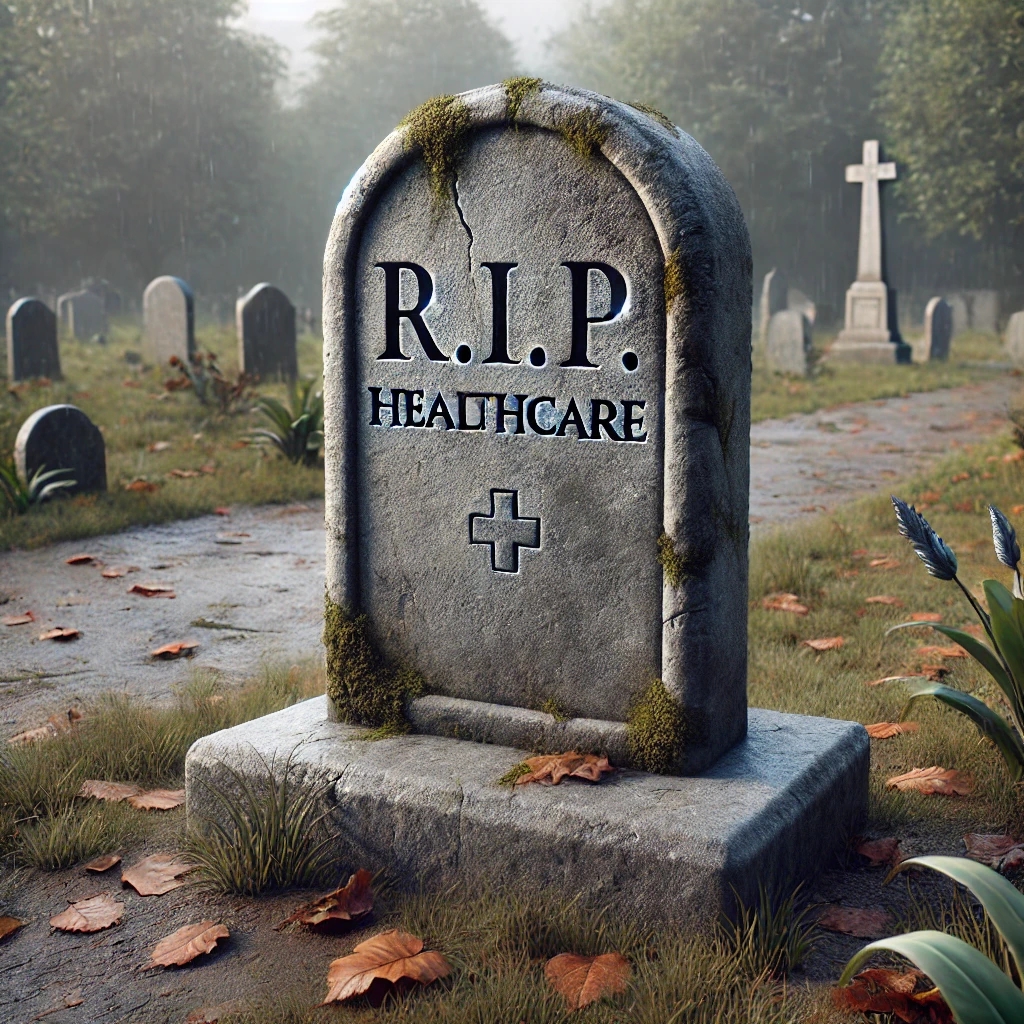
RIP Health

With the new Trump administration there has been a flurry of activity that does not bode well for healthcare. Not all these things may come to pass, but I’ll comment on some of them.

Federal scientific meetings were cancelled, and federal health officials were told to refrain from all public communications, including publications and speaking engagements, until approved by a presidential appointee or designee. It includes email lists and social media posts. It prevented the C.D.C from publishing the Morbidity and Mortality Weekly Report on 1/23/25, that was to include information on the spreading bird flu affecting poultry and cows, as well has humans. It prevented meeting, such as advisory committees on health issues, and funding for research at the National Institute of Health (NIH). Scientific and medical information should be managed by scientists and medical professionals, not politicians. That didn’t work out well at the beginning of the COVID-19 pandemic, when political messaging took precedence, and advice was rendered that led some infected patients to drink bleach. That lesson doesn’t seem to have been learned.

There was a haphazardly announced (and probably illegal) federal funding freeze that at least temporarily (until parts were rescinded or blocked by a judge) affected such things as Medicaid, funding for doctors and nurses at Veteran’s Administration (VA) hospitals hired to start in February (some who had already moved their families), VA suicide prevention lines, disaster relief to places such as Los Angeles (fires) and North Carolina (floods), and medical research.

Robert F. Kennedy Jr. has been nominated to be the Secretary of Health and Human Services. Although he has some views about food that I might agree with, there are many reasons he is completely unsuitable for the job. Over the years he has repeatedly questioned the safety of vaccines, including measles and polio. These are devastating illnesses that we rarely see nowadays, thanks to vaccines. At a talk in November he said 48% of (American) teens are diabetic. It’s less than 1% at that age. He also seemed to mix up pre-diabetes, which is brought on by diet, with juvenile (Type 1) diabetes, that is not. He falsely said that the flu shot does not prevent hospitalizations and that it increases the risk of spreading it to others. He falsely said the pertussis vaccine (part of Tdap) causes brain injury.

Two days ago the administration ordered health organizations in other countries to stop distributing HIV medications purchased with U.S. aid. This was part of a freeze in PEPFAR overseen by the State Department. This program has been estimated to have saved 25 million lives worldwide. Besides the importance of being a good global citizen, it indirectly benefits U.S. citizens. The less cases in the world, the less likely Americans will get infected one way or the other. If patients go off HIV medications temporarily, it increases the risk they will develop drug resistant HIV, which could then spread worldwide. Providing such a benefit is soft diplomacy that buys good will and decreases the chances that other countries that are not friendly to us will be able to influence them. When countries do poorly, they are also more like to develop terrorists. Yesterday the administration at least temporarily allowed the distribution to resume.

There have been a number of initiatives that adversely affect transgender people, including healthcare.

Did I leave anything out? That’s just a little over the first week!

Speaking Truth to Power

On 4/18/22, a federal judge in Florida struck down the CDC requirement of wearing masks on trains, planes on domestic flights, and other public transportation. This came less than a week after the Centers for Disease Control extended the mask mandate through 5/3/22. Immediately a number of airlines, including Delta and Alaska, announced that they were removing the requirement.

She made this ruling before a hearing was held, and nationalized the ruling rather than limiting it to the plaintiffs who had filed the case. In addition the mandate was probably going to go away in 2 weeks in any case.

Who was this federal judge? It was Kathryn Kimball Mizelle, appointed for a lifetime position at the age of 33 by President Trump, despite that she had never tried a case, and the American Bar Association rated her as, “Not Qualified.”

Just because she had the power to make this ruling, doesn’t mean she’s right. Of course when it comes to the law, I’m even less qualified than this judge, but from a medical point of view, we’re still in a pandemic. I, for one, will continue to wear a mask in an airplane, at least for a while, even if it’s just to avoid the common cold.

New Dietary Guidelines Ignore Science

20190521_Europe-2006

The federal government has issued dietary guidelines every 5 years since 1980. They are the ones that came out with the food pyramid, and most recently gave limits for sugar, saturated fat, and sodium (salt). These guidelines affect many things, including what children get served for lunch at school.

For the first time ever, the Department of Health and Human Services and the Department of Agriculture, under the direction of the Trump administration, is limiting the scope of the committee. They gave them a list of 80 questions, and said they are not to consider anything outside that list. Those questions do not include health risks such as too much salt, red meat, and processed foods.

The nature of science is that with ongoing research things change. Most of you can probably recall getting conflicting diet recommendations over the years. We were told to avoid fats, as we subsequently got collectively heavier, then ketogenic diets said the opposite. Alcohol can decrease heart disease, then studies showed it can increase breast cancer. That’s why it’s important to periodically review the literature and adjust recommendations if warranted.

Why would the Trump administration want to limit the committee? For one thing, they have generally been anti-science in many areas, such as global warming. For another, as they say, follow the money. Thirteen out of 20 of the committee members have food industry ties. This compares with two of 12 members in 2015. You can read more details in a Washington Post article.

Health care costs have been going up at a rate higher than inflation for many years. Although there are many reasons for this, part of it is because people are getting more obese. This leads to such health issues as diabetes, hypertension, heart disease, and arthritis. The new rules effectively says that corporate interests trump human health. So that corporations can profit more, we will pay the price in our health, and in our future medical bills.

The statute (Public Law 101-445, 7 U.S.C. 5341 et seq.) that required the guidelines specifically says that the Dietary Guidelines be based on the preponderance of current scientific and medical knowledge. As that wouldn’t be the case, unless the restrictions are removed, I expect that from 2020 to 2025 I’ll be advising my patients to follow the 2015 guidelines.

Medical Pricing Transparency via Non-Transparent Rule

copyright 2015 Daniel Ginsberg PhotographyHidden in a 700-page draft regulation to improve patient’s access to their electronic medical records is a proposal to require doctors, hospitals, and other healthcare providers to publicly reveal the prices they have negotiated with insurers. This rule, tied to the 21st Century Cures Act, would set the stage for eventually making prices publicly available. Although price transparency may be a good way to help lower medical costs, it’s ironic that there is a lack of transparency when it comes to the proposed rule. I challenge you to read the Title, Summary, or Actions section and realize that it includes such a major change (hint – in the PDF document it’s on page 7513 of the Federal Register under Price Information).

On the face of it, making prices readily available sounds like a no-brainer, but I think it’s more complicated than that, and there may be unforeseen consequences. The rule is long and complex, and I don’t have the few days it would probably take me to really understand it, but let me play devil’s advocate. Some of the comments posted say that medicine is the only industry that hides the cost. To a certain extent that’s true, but this rule could go beyond just saying the price consumers pay. If you go to a restaurant they won’t reveal how much they paid for the the ingredients. If you book through a 3rd party website, they don’t tell you how much, if any, they pay them for the referral. When you buy a car the dealer usually doesn’t tell you if the automobile manufacturer is giving them a rebate. From the point of view of a business, the consumer shouldn’t get to know their internal costs as that’s secret competitive information.

What mitigates that argument is that the price of healthcare has gotten out of control. Despite being better educated about the matter than most, when it comes to getting healthcare for their own family I suspect most physicians struggle to understand their bills just like everyone else.

When it comes to pay, doctors are a commodity. For a given surgical procedure or office visit of a certain complexity, they are paid the same amount as mandated by Medicare or Medicaid, as negotiated with insurance companies, or their list price for the unfortunate cash patient. Just like any profession, some doctors are better than others. If you want to hire a top lawyer or an A list actor, you have to pay top dollar.  But that’s not so with much of healthcare. The price doesn’t necessarily reflect the quality of the care.

Hospital systems mitigate that somewhat. They can negotiate higher prices with insurance companies and with large employers by demonstrating that they provide higher quality care and/or lower cost care, or because patient perceive them as providing superior care and they demand that that can get care from them. What will happen if the rule goes into affect and patients can easily compare prices? I don’t know, but potentially they might choose the lowest cost without regard to quality. That could lead to systems competing on price, cutting corners to do so, and ultimately lowering quality.

The lowest price might actually not be the path to cost savings. Imagine two surgeons. One of them charges $5,000 for a knee replacement, and operates on 60% of the patients seen for knee arthritis, treating the rest successfully with injections and physical therapy, which on average costs $1,000. The other charges $7,000, and operates on 50% of the patients seen and treats the rest successfully with the same conservative measures. Besides the physician fee, the hospital system charges $10,000 for the surgery. In this example, treating 100 patients would cost $940,000 for the first surgeon, and $900,000 for second. So even though the second surgeon charges 40% more than the first, on average the doctor ends up being cheaper when it comes to managing knee arthritis.

I’m inclined to support more transparency in healthcare pricing, but I don’t know how much of an impact it will have, and there may be unintended consequences.

Don’t expect to see published prices anytime soon. Even if the proposal goes forward, following a public comment period that ends May 3, it’s likely to be tied up in legal challenges for quite a while.

National Guideline Clearinghouse Goes Kaput

Although the practice of medicine has existed for thousands of years, it substantially improved with the implementation of the scientific method. Experiments and research studies improved diagnosis and treatment. Now so much information is published that no person can read everything unless, possibly, it’s limited to an extremely narrow subspecialty.  In addition, different studies can come up with opposing results, and it can be difficult to make sense of all the available information.

To remedy that, various groups have published guidelines to help clinicians decide what to do. For example, new guidelines for high blood pressure were recently published. The American Diabetes Association just updated their guidelines for Standards of Medical Care in Diabetes.

So how does one find out about existing guidelines, other than doing a web search or coming across it in a journal? Well in 1998 the National Guideline Clearinghouse was created. It formed a collection of guidelines that met minimum quality criteria. By June 2018 there were more than 2000 guidelines listed that could be searched by specialty. In July of 2018 all of that information became unavailable on the website because of federal government budget cuts.

The website was originally created by the Agency for Healthcare Research and Quality (AHRQ), in partnership with the American Medical Association (AMA) and the American Association of Health Plans (now America Health Insurance Plans).

In the last year of operation, the National Guideline Clearinghouse’s budget was about $1.2 million dollars. This is only about 1% of the money spent globally on developing guidelines, and an even much lower percentage of the cost of medical care. The guidelines can improve care and save money, but only if people can find them. Both my company’s electronic health record and my county medical society’s website have the National Clearinghouse Guidelines integrated to reach them with a click. I’m sure we’re not the only ones who routinely used it.

Perhaps a better repository can and will be built, but in the meantime I think the government should fund the National Guideline Clearinghouse and bring it back online.  This was not a case of trimming fat from the national budget, but a self-inflicted stroke where the government cut off the blood flow (money) to a portion of our collective brain. We’re the worse for it.

Trying to Destroy Healthcare the Ostrich Way

Copyright: <a href='https://www.123rf.com/profile_andreykuzmin'>andreykuzmin / 123RF Stock Photo</a>Ostriches reportedly stick their heads in a hole if they see something they fear. If they can’t see it, then it must have gone away. President Trump, with most republicans lawmakers going along, is trying that same tactic on the public. Despite 7 years of promises, and multiple attempts, Republicans have been unsuccessful overturning the Affordable Care Act, otherwise know as ObamaCare. So Trump has been doing everything he can to destroy it, with the hopes that it will wither and die, then he can blame Democrats on it’s demise, claiming it was bad legislation. This despite not having a good alternative.

One of the efforts have been to keep people from signing up for coverage for next year. The Trump administration has cut the advertising budget by 90%, shortened the enrollment window, and will close the site on some Sundays for, “maintenance.” They figure that if people can’t see it, they will think it must not be there.

Well sign up just started. If you don’t otherwise have coverage, such as through work, sign up right away, while you still can.  You must sign up by 12/15/17. Don’t wait until the last minute as you might not be able to get on the site. Don’t be scared off by reports of premiums going up. Although true, subsidies also go up per the law, and it costs nothing to find out what it would cost for coverage. Go to healthcare.gov.

Regulators Asleep at the Wheel

Recently the Federal Railroad Administration and Federal Motor Carrier Safety Administration said they would no longer continue pursuing regulations requiring testing for sleep apnea in truck drivers and train engineers.

Sleep apnea is a condition where, in the most common form, the airway is partially blocked during sleep. This leads to daytime sleepiness, increasing the risk of accidents, plus is otherwise hazardous to patient’s health if untreated.  The National Transportation Board determined that a 2013 train derailment that killed 4 and injured 59 was a result of undiagnosed sleep apnea. According to the railroad Metro-North in the New York City suburbs, 11.6% of it’s train engineers have sleep apnea.

Screening involves an overnight sleep test.  We require our pilots to get tests for drug use. Why would we not want to test truck drivers and train engineers for a common problem that is just as dangerous? It’s part of President Donald Trump’s campaign to cut federal regulations. Although some regulations are excessive, this is not one of them. What’s next, repealing seat belt and motorcycle helmet laws?

Politicians Playing Doctor

Recently the British baby Charlie Gard has been in the news. Unfortunately he was born with a rare disorder called Infantile Onset Encephalomyopathic Mitochondrial DNA Depletion Syndrome. The parents of the 11-month-old boy have been in a court battle with the London Hospital caring for him since October. The hospital obtained a court order to remove the boy from life support as the doctors treating him said his condition was terminal and that treatment would just cause the boy additional distress.

The parents have held up hope for an experimental treatment with nucleosides a U.S. doctor has offered, even though he had not examined the patient. In fact no person or animal with Charlie’s condition had ever received the treatment. Reportedly 9 patients with a related disease had some improvement with the treatment.

President Trump weighed in:

Recently Republican House Congressmen Brad Wenstrup (Ohio) and Trent Franks (Arizona) said they would introduce a bill to give Charlie permanent residency in the United States so he can travel for the experimental therapy.

I sympathize with the parents. It’s awful to see your children with serious illness. However sometimes stopping care really is the best thing to do. The US doctor reportedly said a 10% improvement in strength was possible. But that’s the same as saying you can go from lifting 10 lbs to being able to lift 11 lbs. It’s just not going to make a significant difference.

I also believe in research studies. In fact close to 20 years ago I had a patient with a different neurological disorder who could not be removed from a ventilator. I received FDA approval to administer an experimental treatment. It may have helped – they did get off the ventilator, but they died not that much later. That drug had preliminary treatments in animals, then in humans.

If our politicians were really that concerned about the health of an infant in another country, maybe they would accept refugees from countries such as Syria, where innocent people have been in terrible conditions. Their chances of improvement would practically be guaranteed. Unfortunately for Charlie, that’s just not realistic.