Regulators Asleep at the Wheel

Recently the Federal Railroad Administration and Federal Motor Carrier Safety Administration said they would no longer continue pursuing regulations requiring testing for sleep apnea in truck drivers and train engineers.

Sleep apnea is a condition where, in the most common form, the airway is partially blocked during sleep. This leads to daytime sleepiness, increasing the risk of accidents, plus is otherwise hazardous to patient’s health if untreated.  The National Transportation Board determined that a 2013 train derailment that killed 4 and injured 59 was a result of undiagnosed sleep apnea. According to the railroad Metro-North in the New York City suburbs, 11.6% of it’s train engineers have sleep apnea.

Screening involves an overnight sleep test.  We require our pilots to get tests for drug use. Why would we not want to test truck drivers and train engineers for a common problem that is just as dangerous? It’s part of President Donald Trump’s campaign to cut federal regulations. Although some regulations are excessive, this is not one of them. What’s next, repealing seat belt and motorcycle helmet laws?

Politicians Playing Doctor

Recently the British baby Charlie Gard has been in the news. Unfortunately he was born with a rare disorder called Infantile Onset Encephalomyopathic Mitochondrial DNA Depletion Syndrome. The parents of the 11-month-old boy have been in a court battle with the London Hospital caring for him since October. The hospital obtained a court order to remove the boy from life support as the doctors treating him said his condition was terminal and that treatment would just cause the boy additional distress.

The parents have held up hope for an experimental treatment with nucleosides a U.S. doctor has offered, even though he had not examined the patient. In fact no person or animal with Charlie’s condition had ever received the treatment. Reportedly 9 patients with a related disease had some improvement with the treatment.

President Trump weighed in:

Recently Republican House Congressmen Brad Wenstrup (Ohio) and Trent Franks (Arizona) said they would introduce a bill to give Charlie permanent residency in the United States so he can travel for the experimental therapy.

I sympathize with the parents. It’s awful to see your children with serious illness. However sometimes stopping care really is the best thing to do. The US doctor reportedly said a 10% improvement in strength was possible. But that’s the same as saying you can go from lifting 10 lbs to being able to lift 11 lbs. It’s just not going to make a significant difference.

I also believe in research studies. In fact close to 20 years ago I had a patient with a different neurological disorder who could not be removed from a ventilator. I received FDA approval to administer an experimental treatment. It may have helped – they did get off the ventilator, but they died not that much later. That drug had preliminary treatments in animals, then in humans.

If our politicians were really that concerned about the health of an infant in another country, maybe they would accept refugees from countries such as Syria, where innocent people have been in terrible conditions. Their chances of improvement would practically be guaranteed. Unfortunately for Charlie, that’s just not realistic.

Exploring Cuba – Part 2

In my prior post, I discussed a trip I made to Cuba in December. In this second part I will focus on some medical aspects.

When my patients ask about foreign travel where there may be health concerns, I usually direct them to the CDC site. It’s also where I go to check for my own travel, though I look at the more detailed Clinician view.  To start off it recommends typhoid vaccination.  You have a choice of the oral or injected. The oral is a live virus that is taken every other day for 4 doses, starting 12 days before potential exposure. It gives better immunity, but should not be taken by people with a suppressed immune system, such as those on steroids. The injected form is a non-live vaccine, a single injection taken at least 2 weeks before potential exposure. The injected form is harder to find, and even pharmacies that carry it may need to order it in advance. The injection is more expensive, and neither vaccine is usually covered by one’s health insurance. There are other vaccines recommended, but typhoid was the only one I needed.

Cuba has mosquitoes that may carry Dengue Fever, and more recently Zika. I chose to travel in December because it was outside hurricane season, it was the cooler time of the year, and there are less mosquitoes around that time. Cuba does a better job than many other countries controlling mosquitoes, but I was still cautious. Due to the cost, they don’t use insecticides to fumigate buildings, but rather burn oil, as can be seen in the photo above. We checked in to one place not long after they had done their weekly spray, and had to wait 30 minutes for smoke to stop poring out the window! I sprayed much of our clothes with permethrin spray, and applied DEET to exposed skin, especially in the evening when the mosquitoes are more apt to bite.  I texted PLAN to 855-255-5606 to get periodic updates from the CDC about Zika before the trip.

Food is generally safe to eat, but we avoided street food. The tap water is not safe, however. We mostly depended on bottled water and avoided ice except at a few restaurants and bars that filtered their own water. Bottled water is kind of pricey at times. The best deals are on large (3-4 liter bottles) that you can find sometimes in stores. They often cost the same price or less than a one liter bottle that is more readily found. I also brought along a SteriPEN which sterilizes water with ultraviolet light. I didn’t have enough experience to trust it completely to replace buying bottled water, but used it to sterilize water to rinse our toothbrushes, and would have used it if we didn’t have bottled water. I also recommend bringing Imodium, and an antibiotic from your physician for traveler’s diarrhea. I’d also bring some toilet paper. Many public toilets often didn’t have any, or  you’d get a small amount from an attendant after giving a tip.

Bring sunscreen. It’s not easy to find places that sell it in Cuba, and it’s expensive.

Months before my trip I tried to arrange to visit a hospital. It so happened that the fiancée of a Cuban in the travel industry who helped with some of the arrangements was an anesthesiology resident. He told me that he would love to show me his hospital, but that unfortunately the government required a 30-50 dollar payment, despite the fact that I said I would be bringing some medical supplies. He also said I would not be allowed to tour the medical school due to, “national security!” After I arrived we talked a number of times, and ultimately he could not get government approval for me to see his hospital, even though he said everyone at the hospital wanted me to come. He said the only exceptions they made were for those with an educational visa, coming to teach basically, and even then they needed at least 3 months notice.

Although I could not tour the hospital, I had some long conversations with that doctor and learned a lot about their system. All things considered, the Cuban doctors are apparently pretty good, but they are particularly hampered by old equipment and lack of medications and supplies. The anesthesiology resident showed me photos of anesthesia equipment they currently use that are from the 1980’s. He said they don’t have air scrubbers in the operating rooms, so sometimes everyone gets sleepy!  He told me about a colleague of his who was working with a nurse anesthetist. She let her go home early because she wasn’t feeling well. Later she had to intubate a pregnant patient. Unfortunately it didn’t go well and the patient suffered brain damage. During a subsequent investigation the government argued that had she not let the nurse anesthetist go home early, maybe the patient wouldn’t have died because she would have had additional help. She was sentenced to 12-15 years in prison, and even if she gets out after 5-7 years for good behavior, she won’t be allowed to be a doctor anymore! Because physicians are held responsible for a bad outcome, Jehovah’s Witness patients are told they can’t refuse blood if needed, though they do take measures to minimize the need. Doctors are paid poorly (the resident said after he finished he would make 80 CUC (about $80) a month), often less than taxi drivers. It’s very difficult for specialists to be allowed to leave the country, even on vacation, for fear they won’t come back. If they go on medical missions they are paid better than usual, but they only pay them the bare minimum while they are abroad to encourage them to return home after the mission. I was surprised to learn that they are fairly tolerant in terms of LBGT, in part due to Raúl Castro’s daughter, and they even have doctors who do sex reassignment surgery to change gender.

Many Cubans rely on natural formulations, such as herbs, they call ‘green medicine,’ due to cost or personal preference. The anesthesiologist told me that for a man to get a prescription for Viagra (sildenafil) he has to see his primary care doctor, a urologist, and a psychiatrist. Once they get a prescription, though, they are basically assured of getting it indefinitely. He said many patients research their condition and tell their doctors what prescription they want, and they often comply.

One of the most dangerous things in Cuba are the cars. They are famed for their old cars, many of which look fabulous, but they lack safety features, such as seat belts and airbags. In fact we were in a car accident. We hired a car and driver for 6 days through a contact in the travel industry in Havana. He was probably around 60-years-old, and reportedly one of their best drivers. He was very nice, funny, and knowledgeable, and arrived to pick us up in a pretty new Chinese car, a BYD (Build Your Dream). On the first day as we were driving, while my wife and daughter were sleeping in the back, the car started drifting to the left. I grabbed the steering wheel, noting the driver had fallen asleep. He quickly awakened, pulled the car to the side of the road, and got out to stretch. He came back in and apologized, saying he had gotten up early to pick the car up. The next day he said that actually he hadn’t slept well because he had witnessed a teenager, who was not paying attention listening to music, hit by a car the day before.

In the middle of the car trip I met with the doctor I mentioned above and told him about the incident. I wondered if he might have sleep apnea, though the driver had said he had never had such a problem.  He said that they don’t test for sleep apnea because they don’t have CPAP machines to treat it.

The rest of the road trip went fine until the final day. Once again my wife and daughter were sleeping in the backseat when the driver fell asleep again. This time he swerved too quickly for me to reach the wheel. We hit a guard rail, damaging the front end and side mirror and puncturing two tires. The driver said he did not know why he fell asleep and that he had been well rested. One theory I came up with is the possibility of carbon monoxide poisoning from a leak in the exhaust system. Our driver obtained another car and driver for us, who brought us back to Havana.
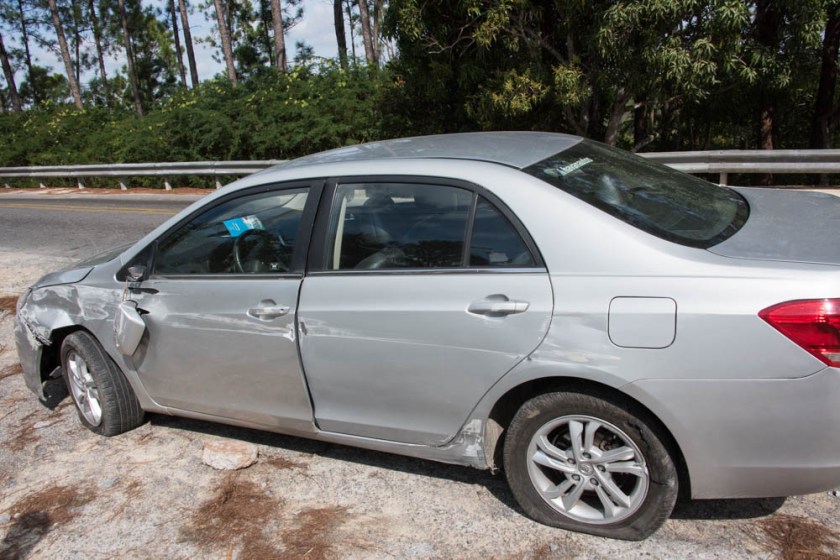
No one was serious injured, but my wife was seated behind the driver and her left elbow hurt immediately afterward. Back in Havana we went to a clinic that caters to foreign visitors. X-rays showed no fracture.  She was given a skinny piece of gauze to use for an arm sling (she had been using my belt up until that point). When it came time to leave they said we owed 100 CUC (about $100).

Boarding Pass


Cuba requires one to have medical insurance to visit the country, and they add $25 to the price of each airline ticket to cover it. Delta Airlines said to show the boarding pass if needed as proof of insurance. I showed the boarding pass, but they said it wasn’t good because it said AeroMexico on the top. I pointed out that below that is said that it was operated by Delta Airlines. They said they would have to investigate it. They gave no indication how long it would take, and given that it was the evening I didn’t think they would get an answer that night. I eventually gave up, paying the money so we could get her passport back and leave. I wrote Delta Airlines and explained the situation, sending them copies of the boarding pass and the medical bill. We were on something like their 4th commercial flight to Cuba, so I figured they would be eager to work out any glitches. I was wrong. Besides some email exchanges, they called twice at 7 am. When I pointed out the early hour I was told it was 10 am on the East coast. You would think an international airlines understood the concept of time zones! In any case, ultimately I was told we, “..must request a refund of the insurance premium directly with the Cuban insurance provider.” Really? They expect their customers to request a refund from the Cuban government?! All I was asking for was the approximately $100 I paid for the clinic. Not the taxi ride there and back, the medical costs after we got home, to say nothing of pain and suffering. Imagine someone of lesser means ended up needing much more care and being told the insurance they thought covered them didn’t. That might keep people from choosing to visit Cuba, at least on Delta Airlines.

Presidential Politics and Influenza Vaccinations

Recently a patient of mine expressed frustration with the presidential campaign, saying the other side wouldn’t listen to facts and just believed what they wanted to believe.

Knowing that she had repeatedly refused to get a flu shot, I asked her in that case if she’d like to get one, given that scientific studies have shown that the benefit outweighs the risk for most people. Although she hesitated, I unfortunately could not convince her.

ICD-10 Keeps Getting More Painful

As I previously discussed,  a year ago we transitioned from the disease classification ICD-9 to ICD-10. That has been painful, but they keep making tweaks that require more work.

I guess the powers that be decided that more than 155,000 diagnoses were not enough when they recently changed many diabetes diagnoses (a day or two ago, at least, my organization implemented the latest edition). Now it’s no longer sufficient to say that someone has Type 2 Diabetes Mellitus with Diabetic Neuropathy [E11.40], for example, but I now have to specify in addition whether it’s with or without long term insulin use, or if it’s unspecified. That means all my carefully constructed Problem Lists on my patients no longer work. Every diabetic medication I reorder will have to be changed as they are associated with a diagnosis.

Across all my patients I’d estimate that’s close to 1000 changes I will need to make. Assuming it takes me 30 seconds each time (I’m probably a lot faster than most of my colleagues) that’s over 8 hours, so a full work day. Multiply that across all the primary care doctors and that’s a lot of time – about 1000 people working years! We have a shortage of primary care physicians and I think there are many better ways to spend our time.

I typed “type 2 diabetes mellitus” into my electronic medical record. I eventually scrolled to the bottom to see a message that there were 3158 diagnoses loaded, but that the results had been limited due to it being a common phrase! Many of these were synonyms, and one can save favorites, but I think it’s ludicrous that we have so many codes for just one disease. Those who promulgated moving to ICD-10 claimed the higher specificity would lead to all kind of advantages by being more precise, but in reality physicians can’t spend all day just to pick a diagnoses and they are going to pick something close that will satisfy the billing system. For many diagnoses you can’t even get precise agreement. There are various codes for uncontrolled diabetes, for example, but if you ask different doctors what that means, you’ll get different answers.

Patients with diabetes have to suffer from complications of their disease, increased medical costs, and being stuck more often for blood or injections. It’s too bad their physicians have to suffer more as well.

Remote Globe Puppy

crowned.tamed.raced

The New York times just ran a story about how Mongolia uses a system for their mail where each address consists of three words. A clever British start-up company What3Words divided a map of the world into 57 trillion pieces, each 9 square meters (about 10 x 10 feet), and assigned a 3 word combination to each one.

I checked the address of my office, and it’s crowned.tamed.raced. Given that each address takes up such a small area, I honed in on the map to where the actual rooms in my building are. Here are some of the address I came up with: remote.globe.puppy, patio.thin.ropes, living.quit.exit, castle.lofts.roses, famous.learns.cheek, and minds.agent.former.

I would say that as a geriatrician, living.quit.exit is a pretty good description of what I do, but from a marketing perspective, I’d have to go with remote.globe.puppy.

Let’s be Clear on ClariSpray

20151010_Europe_1027

Bayer, the maker of Claritin, has a new product, ClariSpray. This is a good product, but with a confusing name. It has nothing to do with Claritin, other than they are both used for allergies (allergic rhinitis).

It’s actually fluticasone nasal spray, the same ingredient as Flonase, a prescription product, but now available over-the-counter.

Their website does takes pains to explain this, but there are some things things they don’t mention. They don’t say how it compares with Flonase or Nasacort. Although there are slight differences, and some people may prefer one over the other, they are basically similar, and just a matter of personal preference. Bayer’s website also doesn’t tell you that you shouldn’t take ClariSpray if you are taking Flonase or Nasocort, or one of the other nasal steroid sprays only available by prescription.

The Medical Paperwork Reduction Act

20151015_Europe_1612
Painting in the Mauritshuis Museum

Today, in a rare moment of bipartisanship, Congress passed the Medical Paperwork Reduction Act. It states that administrative requirements will be decreased to the minimum required for good medical care and billing. The Department of Labor estimated that this will reduce the average physicians paperwork by 1.7 hours a day, and that for primary care physicians, it will be closer to 3 hours a day. That in turn is expected to significantly decrease the primary care physician shortage, as they will be able to see more patients a day, and lessen unnecessary emergency room visits. Doctors’ morale is expected to improve with improved job satisfaction, leading to less early retirement, decreased physician suicide, and a lower divorce rate. Despite an increase in administrators and clerical staff seeking unemployment benefits, the Congressional Budget Office estimates a net benefit to the economy of 17.2 billion in the first year. “This is a special day. I never dreamed of seeing this,” said AMA spokesman Jonathan Dreckle, “not in a million years.”

Trump the Bureaucracy

About 6 weeks ago I referred a patient of mine with a knee problem to an orthopedic surgeon in my group. He ended up seeing someone else in the same group about 3 1/2 weeks later, and the doctor prescribed a knee brace.

A few days ago my patient said his insurance company wanted me to do a new referral, because I had referred him to a different physician than the one he ended up seeing. Even worse, he still did not have the brace because they required his primary care physician (that’s me) to write them a letter saying the brace was necessary.

I did write a letter saying that I’m not qualified to say whether or not the brace is necessary, and that if they wouldn’t approve it, then their medical director should contact the orthopedic surgeon to explain why not.

Physicians have far better things to do with their time than waste it on unnecessary paperwork. If we could only channel our collective anger and frustration with the system, as Donald Trump has been doing in the realm of politics, maybe we could spend more of our time treating patients, rather than placating the government and insurance companies.

Gluteus Maximus

I ordered atorvastatin (generic Lipitor) for one of my patients with high cholesterol and Medicare Part D coverage. It was denied. We then appealed it (prior authorization). A fax from Maximus Federal Services said their decision was, “UNFAVORABLE.” They said the patient had not tried and failed one of the preferred generic statins (lovastatin or simvastatin). They did note that we could appeal to an Administrative Law Judge.

In fact the person had tried simvastatin, which I had noted on the prior authorization. However the cost savings is minor. According to Goodrx, a 90 day supply of atorvastatin is as low as $19.25 around where I work.  For the equivalent dose of simvastatin it’s $10.06.

Yes, it’s almost half the price, but it’s still a pretty small amount, especially in my patient who had already had a heart attack, and the difference will only get smaller as Lipitor has not been generic for all that long. Contrast that with the staff time wasted dealing with this on both ends. Dealing with this is a pain in the Gluteus Maximus!